Porch columns do more than frame a front entry. They carry vertical loads from the roof and often brace lateral forces during storms. In Atlanta’s humid subtropical climate, moisture, heat, and Georgia red clay work together to accelerate wood decay and footing movement. When a porch column fails, the roof line can sag, railings loosen, and water entry increases at the ledger and fascia. Left alone, the damage spreads to framing, decking, and even the home’s rim joist. That is why column repairs are urgent, not cosmetic.
Why porch columns fail faster in Atlanta
Metro Atlanta sees heavy spring and summer rain, wide temperature swings, and year-round humidity. Columns wick moisture at the base, especially where paint has failed or flashing is missing. Georgia’s clay soil holds water, then shrinks as it dries. This cycle moves shallow footings and tilts posts. Termites thrive where wood stays damp. In older homes in Virginia-Highland, Ansley Park, and Morningside, unflashed bases and undersized footings are common, which speeds rot at bearing points. Elevated porches and balconies in Buckhead or Midtown face even higher risks due to wind and drainage concentration.
Urgent warning signs that demand action
A column that looks tired may be carrying more danger than it shows. Soft spots near the base, hairline splits that widen, and paint blisters all point to trapped moisture. A porch roof that dips near one corner suggests compression at a rotten bearing or a sinking footing. Creaking when someone steps on the porch often signals a failing beam-to-post connection. A wobbly handrail can indicate larger movement at the column, not just loose screws. If the column sits on a brick pier with missing mortar or visible settlement, the structural load path is compromised.
If the home also has a connected deck, check for related symptoms: spongy decking, loose railings, or the ledger board pulling away from the house. A separating ledger board is a critical failure and calls for immediate engineering intervention. Prompt attention keeps a porch issue from becoming a full structural deck repair.
How porch column issues escalate into deck hazards
Porches and decks often share beams, ledger connections, or stair framing. When a column loses bearing capacity, loads shift to nearby joists and beams. That shift can loosen Simpson Strong-Tie connectors, distort guardrails, and stress fasteners. Moisture intrusion near a sagging roof edge sends water behind siding and into the ledger area. The result can be rot in the rim joist and joist ends, which then creates a path toward collapse. In Atlanta, where storms can dump inches of rain in an hour, small gaps become big problems within a season.
Heide Contracting integrates porch column repairs with engineering-led structural deck repair. The team focuses on ledger board safety, lateral load performance, and foundation stability for elevated decks and porches across Atlanta, GA.
What proper column repair involves
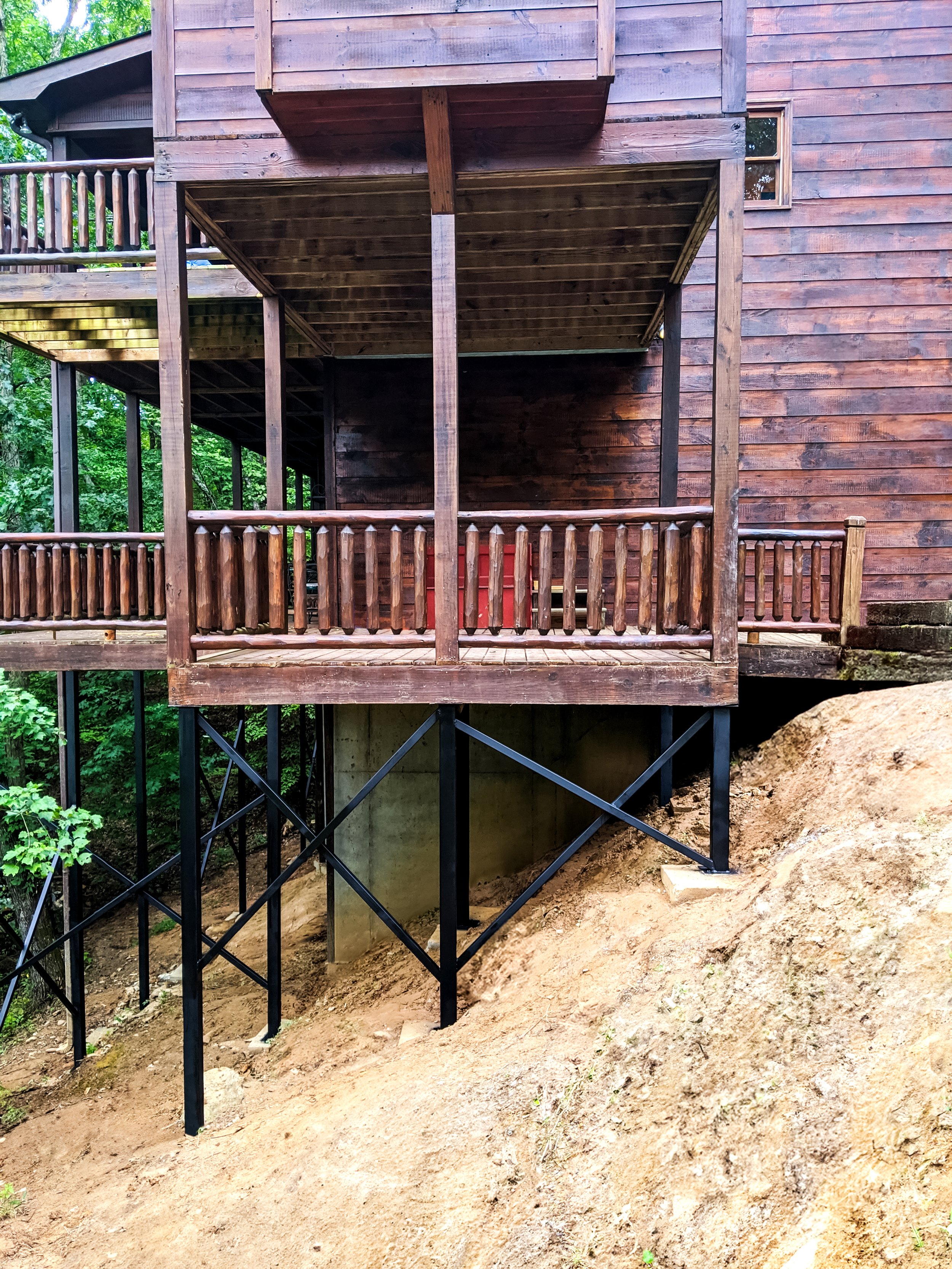
A durable repair starts with a clear load path. The crew supports the roof with temporary shoring, then opens finishes as needed to inspect the post, beam seat, and footing. If wood rot is limited to the base, a new 6x6 post segment with a steel base connector above grade can solve it. If decay extends into the beam pocket or the footing has settled, the scope expands to include beam repairs and foundation work.
Where soil movement is the driver, helical piers offer a reliable fix. In Georgia red clay, they bypass the shrinking and swelling zone to bear on stable strata. That performance beats shallow concrete footings in many settlement cases. In high-exposure locations near the Atlanta BeltLine or on hillside lots in Chastain Park, deep support is often the difference between a short patch and a long-term solution.
The Atlanta-specific approach Heide Contracting uses
Heide Contracting brings structural engineering to residential porch and deck work. The team specifies Simpson Strong-Tie hardware for connections, including DTT2Z lateral load connectors where a porch ties into deck framing. They use DCA6-compliant ledger flashing to keep water out of the rim joist and improve long-term durability. Pressure-treated Southern Pine, verified to SPIB standards, Atlanta outdoor deck repairs pairs with galvanized or stainless hardware to resist corrosion in humid conditions. Where clients prefer composites like TimberTech or Trex for decking near the porch, the crew matches hidden fastener systems to the manufacturer’s specs and local code.
For decks that show signs of soil settlement, the company installs helical piers to deliver a permanent foundation repair that conventional footings struggle to provide in Metro Atlanta conditions. Columns gain new base plates, uplift anchors, and proper stand-off height to keep wood out of splash zones.
Local knowledge that protects historic and modern homes
Service is centered on Atlanta and Fulton County, with frequent projects in Buckhead, Midtown, Virginia-Highland, Morningside, Inman Park, Ansley Park, Garden Hills, Druid Hills, and Chastain Park. Crews work extensively in the 30305 and 30327 corridors, where large porches and elevated decks are common. Many homes near Piedmont Park, the BeltLine, and Georgia Tech see heavy foot traffic and storm exposure, which stresses railings, columns, and ledger connections. Heide Contracting has completed dozens of historic porch and deck restorations in Virginia-Highland and Ansley Park, balancing preservation with code compliance. Neighboring service areas include Sandy Springs, Brookhaven, Decatur, Vinings, Roswell, Alpharetta, and Marietta.
Homeowners searching for deck repair Atlanta will find that porch column problems often sit at the root of wider deck issues. Addressing the column and the connected framing together prevents repeat failures.
What homeowners can check this week
- Look for gaps where the column meets the beam or the base; any daylight or crushed wood signals loss of bearing. Sight along the porch roof line; a dip of even 1/2 inch can indicate rot or footing settlement. Probe the base with a screwdriver; if it sinks more than 1/8 inch, the wood likely has decay. Check rail and stair movement; if they wobble, inspect the nearest column and connections. Inspect the deck ledger and flashing near the porch; any pull-away or staining calls for a safety inspection.
How Heide Contracting restores safety and value
The process begins with a Structural Deck Safety Inspection. An engineer-led team documents wood rot, termite damage, sinking posts, nail pops, and unstable stairs. They verify joist, beam, and post sizes, assess guardrail and lateral load performance, and photograph the ledger board condition. If the ledger board shows separation from the house rim joist, the team prioritizes this hazard the same day.
Repairs follow the DCA6 Prescriptive Residential Wood Deck Construction Guide and current Georgia codes:
- Ledger connections receive code-approved lag bolts, proper flashing, and lateral load connectors. Joists and beams with compromised fibers are replaced or sistered, with Simpson Strong-Tie hangers and hardware. Columns are upgraded to 6x6 posts with stand-off bases, correct uplift anchors, and moisture breaks. Foundations are corrected with deeper concrete footings or helical piers, based on soil findings and load calculations.
This engineering-first approach goes beyond basic handyman work found on mass-market platforms and brings the longevity that high-end Atlanta homes expect.
Materials and components that matter
Columns and posts use pressure-treated Southern Pine, with cuts and bores sealed to slow future rot. Flashing at the ledger and column bases directs water away from critical joints. Simpson Strong-Tie connectors provide tested performance at every link in the load path. Where clients select composite decking like TimberTech or Trex around a repaired porch, compatible hidden fastener systems keep the walking surface tight and quiet. For waterproofing over living space or on covered porches, deck drainage systems protect framing and keep the area dry below.
Cost, timing, and realistic expectations
Minor base repairs and hardware upgrades can complete within a day or two. Projects with beam replacement and footing work often take three to five days. Helical pier installation typically adds a day yet removes the biggest risk: repeating settlement. Most structural repairs built with pressure-treated lumber and galvanized hardware last 15 to 20 years or more, depending on exposure and maintenance. Painting or staining on a two- to three-year cycle and keeping splash zones clear extend service life.
Codes, permits, and liability
Heide Contracting is a fully licensed Georgia contractor carrying general liability and workers’ compensation. The team manages permitting with the City of Atlanta and coordinates inspections. Work aligns with IRC/IBC requirements and the DCA6 guide. This documentation matters for insurance, resale, and personal safety. A signed report from a structural safety inspection also helps identify hidden rot before it becomes a liability.
Why urgency pays off
Porch columns fail in predictable ways, but the damage spreads fast in Atlanta’s climate. Early repairs protect the roof line, stop water intrusion at the ledger, and stabilize any connected deck. They also preserve curb appeal in neighborhoods like Buckhead and Garden Hills where first impressions carry weight. Most important, they keep family and guests safe on stairs, landings, and railings.
Heide Contracting’s engineering-led structural deck repair serves Atlanta, GA, with a focus on porch columns, ledger board safety, and foundation porch column repair in Atlanta stability. Homeowners comparing deck repair Atlanta providers will see the difference in process and results.
Ready for a safer porch and deck
Book a Structural Deck Safety Inspection. A licensed team will assess porch columns, ledger connections, joists, beams, footings, and railings. Located near the Atlanta BeltLine, Heide Contracting understands the demands of dense neighborhoods and elevated decks. Call or request an inspection online to restore the integrity of your porch and the connected deck system.
Heide Contracting provides construction and renovation services focused on structure, space, and durability. The company handles full-home renovations, wall removal projects, and basement or crawlspace conversions that expand living areas safely. Structural work includes foundation wall repair, masonry restoration, and porch or deck reinforcement. Each project balances design and engineering to create stronger, more functional spaces. Heide Contracting delivers dependable work backed by detailed planning and clear communication from start to finish.
Heide Contracting
Phone: (470) 469-5627
Website: https://www.heidecontracting.com, Google Site
Social Media: Instagram, Facebook, LinkedIn
Map: View on Google Maps